ADA Parking Striping: Ensuring Accessibility and Compliance

Commercial Painting Parking Lot Striping 596 views

ADA Parking Striping: Ensuring Accessibility and Compliance

596 views

Parking lot striping that is ADA compliant

Table Of Contents

TL;DR

Don’t let non-compliant parking lot striping put your business at risk. Discover the importance of ADA parking striping and how to ensure your lot meets all accessibility requirements.

Estimated Reading Time: 3 minutes

As a business owner, it is crucial to ensure that your parking lot is accessible to everyone, including those with disabilities. The Americans with Disabilities Act (ADA) has set forth clear guidelines and requirements for parking lot striping to ensure compliance and accessibility. Failing to adhere to these standards can result in legal issues and a negative impact on your business’s reputation. In this blog post, we’ll discuss the importance of ADA parking striping and how to ensure your parking lot meets the necessary requirements.

The Importance of ADA Parking Striping

ADA parking striping is not just a legal requirement; it is also a moral obligation to ensure that everyone, regardless of their abilities, can access your business. By providing accessible parking spaces, you demonstrate your commitment to inclusivity and equal access for all. Proper ADA parking striping not only helps you avoid legal issues but also enhances your business’s reputation and attracts a wider customer base.

Understanding ADA Parking Striping Requirements

To ensure compliance with ADA parking lot striping requirements, it is essential to understand the specific guidelines set forth by the ADA. These requirements include:

  1. Number of Accessible Spaces: The number of accessible parking spaces required depends on the total number of parking spaces in your lot. For example, if your lot has 1-25 spaces, you must have at least one accessible space. As the number of total spaces increases, so does the number of required accessible spaces.
  2. Location of Accessible Spaces: Accessible parking spaces must be located on the shortest accessible route to the main entrance of your business. This ensures that individuals with disabilities can easily navigate from their vehicle to your facility.
  3. Dimensions of Accessible Spaces: ADA parking spaces must be at least 8 feet wide, with an adjacent access aisle of at least 5 feet wide. Van-accessible spaces require an even wider access aisle of at least 8 feet.
  4. Signage: Each accessible parking space must be clearly marked with the international symbol of accessibility. Signs must be mounted at least 60 inches above the ground and include the words “van accessible” for van-accessible spaces.

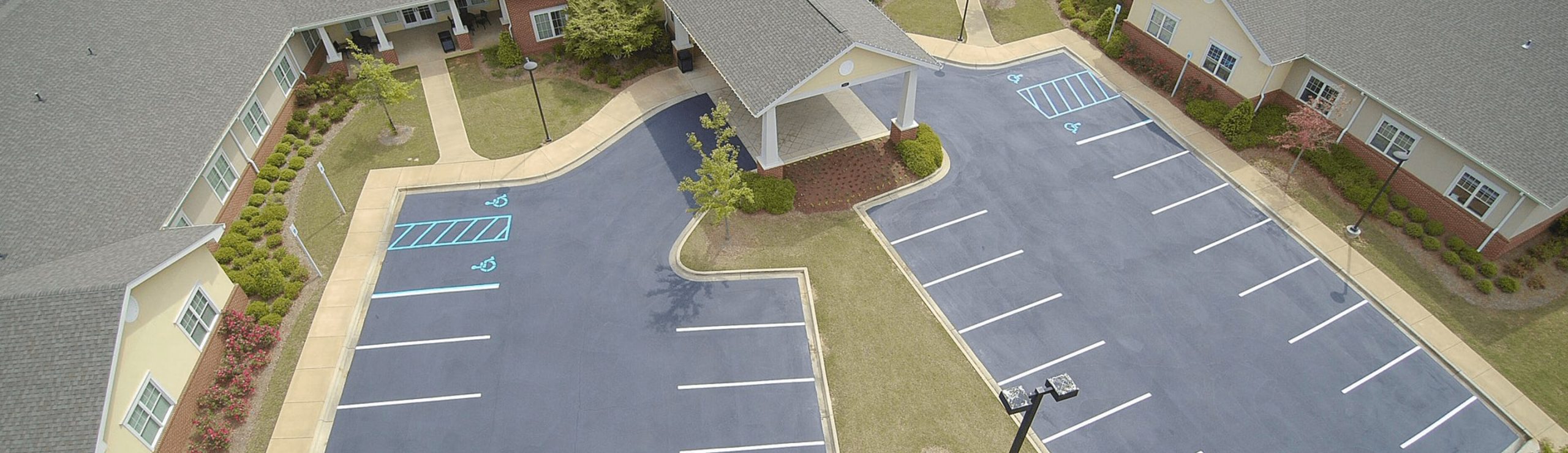
Fresh Parking lot striping from All Source Building Services.

Choosing an ADA Parking Striping Company Near You

To ensure that your parking lot meets all ADA parking striping requirements, it is best to work with a professional ADA parking striping company near you. Look for a company with experience in ADA compliance and a thorough understanding of the latest guidelines and regulations. A reputable ADA parking striping services provider will assess your parking lot, recommend the necessary changes, and execute the striping work to ensure full compliance.

The Benefits of Professional ADA Parking Lot Striping

Partnering with a professional ADA parking lot striping company offers several benefits:

  1. Expertise: Professional striping companies have the knowledge and experience to ensure that your parking lot meets all ADA requirements, helping you avoid costly mistakes and legal issues.
  2. Quality Work: Experienced striping companies use high-quality materials and techniques to ensure that your parking lot striping is durable, long-lasting, and visually appealing.
  3. Time and Cost Savings: By working with a professional company, you can save time and money by avoiding the need to redo incorrect striping work or face legal consequences for non-compliance.

Conclusion

ADA parking striping is a critical aspect of ensuring accessibility and compliance for your business. By understanding the requirements, choosing a reputable ADA parking striping company near you, and investing in professional striping services, you can create a welcoming and inclusive environment for all your customers while protecting your business from legal issues. Don’t let ADA parking lot striping fall to the wayside – prioritize accessibility and compliance today.

Schedule A Free On-Site Estimate For ADA Parking Lot Striping

Rick Drewry

Posted by Rick Drewry on April 22, 2024

Frequently Asked Questions About ADA Parking Striping

Answers to common, practical questions about ADA parking striping: how many spaces you need, exact dimensions and signage rules, van-accessible requirements, enforcement, maintenance, and whether to hire a pro.

How many ADA parking spaces do I need for my parking lot?

The ADA sets a baseline number based on total spaces (for example: 1–25 spaces = 1 accessible space; 26–50 = 2; 51–75 = 3; 76–100 = 4; 101–150 = 5; 151–200 = 6; 201–300 = 7; 301–400 = 8; 401–500 = 9; 501–1000 = 2% of total; over 1000 = 20 plus one for each 100 over 1000). These are federal minimums—local or state codes can require more, so verify local ordinances and building permits.

What are the exact dimensions for ADA accessible parking spaces and access aisles?

Standard accessible parking stalls must be at least 8 feet wide with an adjacent access aisle at least 5 feet wide. Van-accessible stalls require either an 8-foot-wide stall with an 8-foot-wide access aisle or an 11-foot-wide stall with a 5-foot aisle. Surfaces must be firm, stable and slip-resistant with minimal cross slope. Use accurate measurements when striping and consult the 2010 ADA Standards for precise dimensional diagrams.

Where should accessible parking spaces be located in relation to building entrances?

Accessible spaces must be on the shortest accessible route to the main entrance or to an accessible entrance that provides equivalent access. Place them closest to elevators, ramps, or curb cuts needed to reach the building. If multiple entrances exist, provide spaces near the accessible entrance used by the public. Ensure the route from the space to the entrance is accessible—free of barriers, with proper slopes, curb ramps, and clear width.

What are the signage height and wording requirements for ADA spaces, including van-accessible spaces?

Each accessible space must display the International Symbol of Accessibility on a sign mounted so the bottom of the sign is at least 60 inches above the ground and clearly visible. Van-accessible spaces must also be signed with the words "Van Accessible." Signs should be unobstructed and durable. Additionally, ensure any required overhead or vertical clearance for vans is provided and posted where applicable. Local codes may add specific wording or sign dimensions.

Are van-accessible parking spaces required and how do they differ from standard ADA spaces?

Yes—per ADA standards, at least one in every six accessible parking spaces must be van-accessible. Van spaces differ by a wider access aisle (8 feet) or by having a wider stall (11 feet) with a 5-foot aisle. They must be signed "Van Accessible" and provide adequate vertical clearance for vehicle lifts when applicable. Van spaces accommodate wheelchair lifts and larger loading space, so they are essential for compliance and accessibility.

Do ADA parking requirements vary by state or local codes and who enforces them?

The ADA establishes federal minimum requirements, but states and local jurisdictions can adopt stricter rules (more spaces, different sign specs, or additional accessibility features). Enforcement is shared: complaints and investigations can be handled by the U.S. Department of Justice for public accommodations, while local building and zoning officials enforce local codes and permits. Noncompliance can lead to fines, corrective orders, or civil litigation.

How often should ADA parking striping and signage be inspected or repainted?

Inspect ADA striping and signage at least twice a year and after severe weather or snow-plow seasons. Repaint striping when visibility is reduced—typically every 1–3 years depending on traffic, climate, and paint quality. Check signs annually for visibility, mounting height, and damage. Routine inspections catch faded paint, blocked signs, and surface deterioration before they create compliance problems or accessibility hazards.

Can a business owner stripe ADA parking spaces themselves or should they hire a professional?

A business owner may stripe spaces themselves if they strictly follow ADA standards, local codes, and measurement accuracy. However, hiring a professional ADA parking striping company reduces risk: pros ensure precise layout, correct dimensions, proper materials, durable application, and awareness of local permitting. Professionals also provide documentation of compliance, which can be valuable if an inspection or complaint occurs. For most businesses, using an experienced contractor is the safer choice.

Related Articles

Johns Creek Commercial Building Services: The Ultimate Local Authority Guide

Whether you need a fresh coat of commercial painting Johns Creek or a complete office renovation Johns Creek, call All Source today!

The Business Owner’s Guide to Commercial Services in Atlanta: Painting, Renovations, and HVAC

Managing an Atlanta commercial property requires a specialized approach. From navigating Midtown traffic to battling Georgia humidity, this guide covers the essential SOPs for painting, HVAC, and renovations to protect your investment.

Norcross Commercial Building Services: The Ultimate Local Authority Guide

Whether you are looking for commercial painting in Norcross, a full office renovation, or critical duct cleaning, All Source does it all!

Sandy Springs Commercial Building Services: The Ultimate Local Authority Guide

Don't settle for maintenance when you can have a strategic facility upgrade. Contact All Source Building Services today for a comprehensive on-site consultation.

The Business Owner’s Guide to Commercial Building Services in Roswell, GA

A comprehensive guide for Roswell facility managers on maintaining property value and HVAC efficiency in North Fulton. Focuses on local logistics, historic district requirements, and corporate renovation standards.

The Business Owner’s Guide to Commercial Building Services in Buckhead, GA

A comprehensive guide for Buckhead facility managers on maintaining property value and HVAC efficiency in Atlanta's premier commercial district.

The Business Owner’s Guide to Commercial Building Services in Marietta, GA

A comprehensive guide for Marietta facility managers on maintaining property value and HVAC efficiency in central Cobb. This guide covers local logistics, technical SOPs for painting and renovations, and strategies for minimizing business downtime.

The Business Owner’s Guide to Commercial Building Services in Kennesaw, GA

A comprehensive guide for Kennesaw facility managers on maintaining property value and HVAC efficiency in North Cobb.